
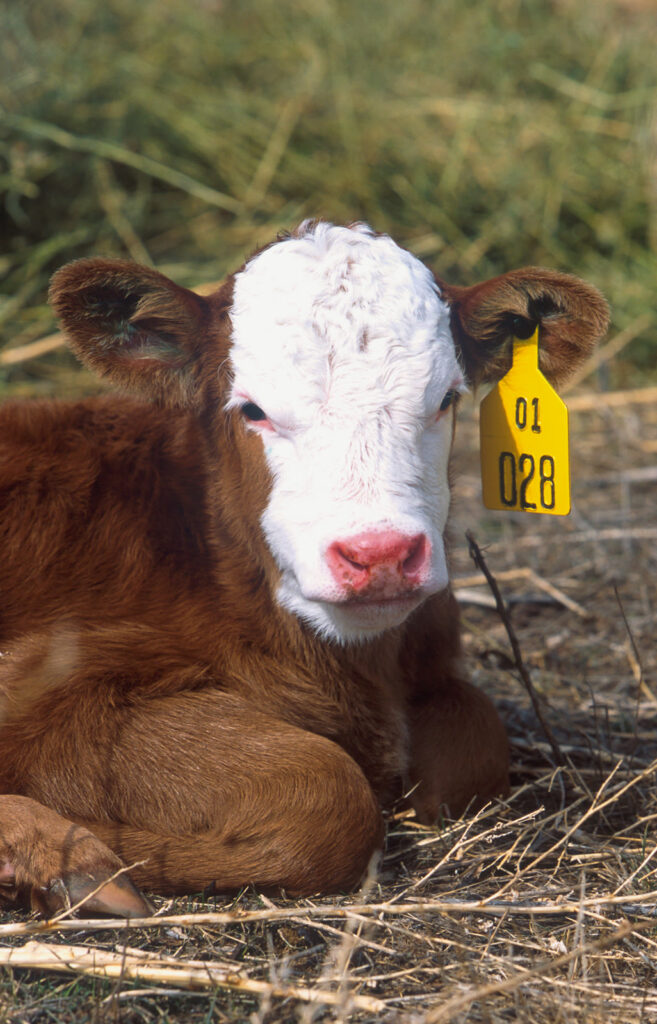
Cattle ear tags are the first thing an official vet checks at loading, and the first thing that stops a lot when a number is missing, misread or does not match the passport. For a seller, identification is mostly routine at home. It becomes a hard gate the moment calves cross a border, because every animal on the truck has to be traceable to one record in one national database.
What EU rules require on cattle ear tags and ID
Bovine identification in the EU sits under the Animal Health Law, Regulation (EU) 2016/429, with the detail in Delegated Regulation (EU) 2019/2035 and Implementing Regulation (EU) 2021/520. In practice, for a calf that is going to be traded, the points that matter are these:
- Two ear tags, one code. Each animal carries two approved means of identification, usually one tag in each ear. One of them may be an electronic tag, depending on the member state. Both show the same individual code.
- The code itself. It starts with the two-letter country code of the member state where the calf was first tagged, followed by an individual number. That code stays with the animal for life, whichever country it moves to.
- Tagging deadline. Calves must be tagged within a fixed number of days after birth, set nationally within the EU maximum, and in any case before they leave the holding of birth.
- Database registration. Birth, movements and death are recorded in the national cattle database, within the deadlines set by that country.
- Identification document. For movement to another member state, each animal travels with its identification document, the bovine passport, issued by the competent authority.
Source: EUR-Lex texts of Regulation (EU) 2016/429, Delegated Regulation (EU) 2019/2035 and Implementing Regulation (EU) 2021/520, and the European Commission’s animal identification pages, as of 26 October 2026. National rules add detail (exact tagging days, tag type, how passports are printed), so check with your own authority when in doubt.
Bovine passports: why the paper still matters
Several countries run fully electronic databases and barely use paper at home. Cross-border trade is different. The passport travels with the calf, and the vet signing the export certificate compares tag, passport and database entry animal by animal. One digit wrong in the passport and that calf stays behind, or the whole lot waits while the record is corrected.
The passport also carries the movement history. A buyer reads it to see where the calf was born, how many holdings it has passed through and how old it is. A calf with a clean, short history is easier to place than one that has been through three dealers in two weeks, even if both look the same in the pen.
On our side, every animal must be individually identified with ear tags and a passport before we load. That is written into our trade terms for suppliers, next to EXW collection at your farm or collection point and transport with our own trucks.
How tags, passports and the export certificate fit together
The order of work before a loading is simple, but it only runs smoothly if each step uses the same numbers.
1. Offer with ear-tag numbers
When you send an offer, list the ear-tag numbers with age and weight per animal. It looks like extra admin. In practice it lets the buyer check ages against the declared weight class and spot gaps early, before a truck is booked. A spreadsheet with one row per calf is enough.
2. Check the passports against the list
Before the loading date, compare every passport with the tag in the ear and with your list. Look for swapped tags, a replacement tag that was ordered but not yet fitted, and passports still sitting in the office of a previous keeper.
3. The INTRA certificate in TRACES NT
The official veterinarian certifies the INTRA animal health certificate in TRACES NT before dispatch, and the certificate lists the identification codes of the animals in the consignment. If a calf is not on it, it does not travel. We do not load before the certificate is issued. The certificate step itself is covered in more detail in our note on the TRACES NT certificate for calf movements, and the wider set of health papers is in vet rules for calves going to Poland.
Common ID problems that hold up a lot
Most delays we see have nothing to do with health. They come from identification details that nobody checked until the vet was standing in the yard:
- A lost tag that was not replaced in time. Replacement tags carry the same code, but they have to be ordered, fitted and recorded before the move.
- Passports still with the previous keeper after a calf was bought in, so the paper does not match the current holding.
- Calves bought in from several farms with movements not yet registered in the database.
- Handwritten lists with transposed digits. Copy the numbers from the database export rather than retyping them from the ear.
None of these is serious on its own. Together, on a lot of 28 or 150 head, they decide whether the truck leaves on time.
What a buyer reads from your ID records
Good identification is also a sales argument. A buyer who receives a clean list of ear-tag numbers, matching passports and a clear date of birth for each calf can plan the loading, the certificate and the barn space in Poland without guesswork. That is the kind of supplier we want to work with on a regular basis rather than for one lot.
We buy in eleven countries; each supplier country page names the authority that certifies the INTRA certificate there. Minimum lots are 28 head for TYPE 1 transport (up to 8 hours’ drive) and 150 head for TYPE 2 (trailer, long distance). Weight ranges on the site are indicative; the exact spec is agreed per lot. If you want a one-page list of what to prepare, the supplier checklist (PDF) covers ID, papers and loading.
To see who you would be dealing with, read about our company and purchasing team. When your calves are tagged and the passports are in order, send the details through the supplier offer form, or start with how we work with long-term calf suppliers. Phone and WhatsApp: +48 691 900 728, email biuro@eurocieleta.pl.