
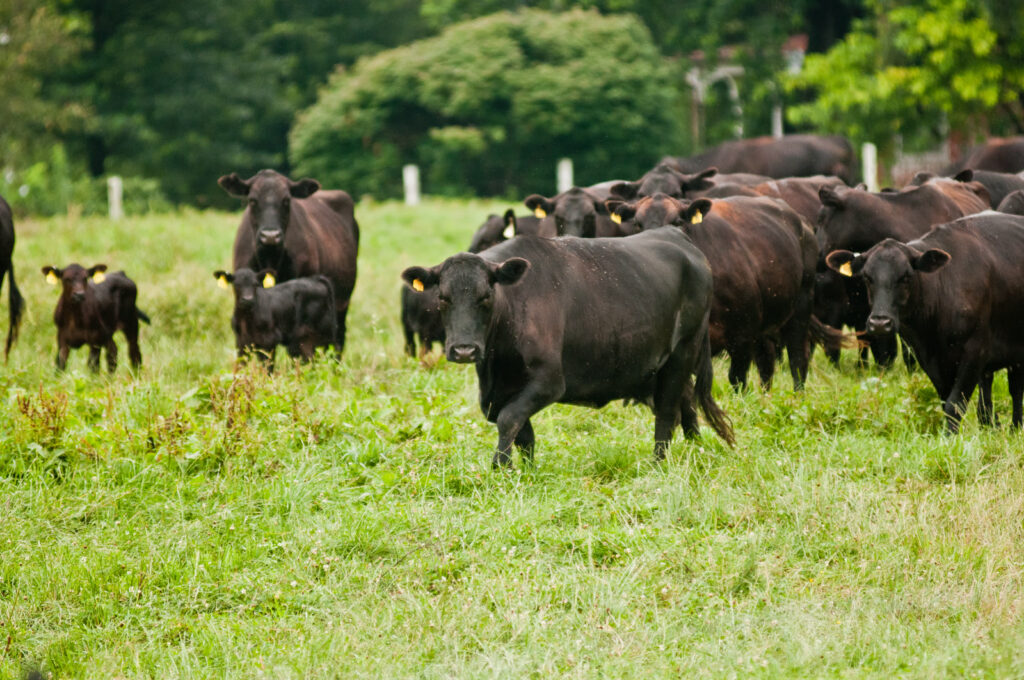
The best age to sell calves is less a single number than a choice between three stages, each with its own buyer, its own rearing cost and its own paperwork. A dairy farm with a steady run of bull calves faces a different decision from a suckler herd weaning beef calves in autumn. Below are the three stages buyers in Poland trade in and what each one asks of you.
One note before the detail. The weight bands in this article are the indicative ranges published on our buying terms page. The actual spec for any lot (age, weight, breed mix, sex) is agreed per lot, not fixed in advance, and there is no price list behind these bands.
Three sale stages and how buyers see them
Most calves that move into Polish rearing and finishing units fall into one of three classes:
- Dairy calves, 52–90 kg. Young calves still on milk or milk replacer. Holstein Friesian bull calves and dairy crosses make up most of this class, with some heifers bought for replacement.
- Starter calves, 110–150 kg. Calves reared through the first weeks and moved onto solid feed. Both dairy-type and beef-cross calves turn up here.
- Weaned or stocker calves, 220–350 kg. Beef breeds only, usually sold off suckler herds once they leave the cow.
Each class suits a different kind of farm on the receiving end. Small dairy calves go to specialist rearers who have the milk feeding equipment, the housing and the staff for very young stock. Starters suit farms that skip the milk phase. Weaned beef calves go to finishers who want a frame they can grow on forage and concentrate.
Selling dairy calves young: low outlay, tight timing
For most dairy farms the bull calf is a by-product of keeping cows in milk, and selling it young is the simplest route. You avoid weeks of milk replacer, labour and pen space. That is why so many Holstein and dairy-cross bull calves are traded in the lightest class. Our earlier piece on where male dairy calves usually end up covers that outlet in more detail.
The constraint is timing. Under Council Regulation (EC) No 1/2005, calves younger than ten days are not considered fit for transport unless the journey is under 100 km, and new-born animals whose navel has not fully healed may not be moved. For a cross-border sale that sets a floor: the calves must be old enough and in good enough shape to travel before anyone books a truck.
The second constraint is volume. A single calf every few days does not fill a load. With collection on our own trucks, the minimum lot is 28 head for TYPE 1 transport (up to 8 hours’ drive) and 150 head for TYPE 2 long-distance transport with a trailer. Farms that calve all year often get there by pooling calves over a few weeks or selling through a collection point.
Source: Council Regulation (EC) No 1/2005, Annex I, Chapter I, text as published on EUR-Lex, as of 15 October 2026.
Starter calves: paying for the risky weeks
Keeping calves to the starter stage means you carry them through the period when most problems show up: scours, respiratory trouble, the switch from milk to solid feed. Feed, bedding, labour and vet time all come before a buyer has committed, unless you agree the lot early.
What you get in return is a calf that is easier to sell to farms without a milk feeding setup, and a lot that has already proved itself. An even batch with a clean health record is also easier for a buyer to assess. It makes sense if you already rear calves and have spare capacity, and rarely if your calf housing is full.
Weaned beef calves: the longer wait
On suckler farms the question looks different, because the calf stays on the cow and the natural sale point is weaning. Weaned calves in the 220–350 kg band are beef breeds and their crosses, and finishers buy them for frame and growth potential. Lot uniformity matters a great deal at this stage: calves of similar weight, sex and breeding are easier to house and finish together.
The trade-off is that you carry the cow, the calf and the grazing for months, and you are tied to a seasonal window when many farms sell at once. If you sell this way, our post on weaned beef calves heading to Polish finishers describes what that buyer looks for. Our cattle breeds guide shows which beef breeds and crosses usually appear in these lots.
Finding the best age to sell calves on your own farm
There is no stage that is right for every herd. A few practical questions narrow it down:
- Do you have space and labour for young stock? If the calf shed is the bottleneck, sell at the dairy calf stage.
- Can you fill a lot? If you can supply 28 or more calves at a time, or 150 for a long-distance load, cross-border sale becomes practical at any stage.
- What breeds do you have? Pure dairy bull calves sell mostly young; beef crosses and pure beef calves give you the option to hold on longer.
- Are your documents in order? Every calf needs ear tags and a passport, and the EU INTRA health certificate is issued in TRACES NT by the official veterinarian before dispatch. No loading happens before the certificate is issued.
Many farms end up with a mix: dairy bull calves sold young, better beef crosses held to starter weight, and suckler calves sold at weaning. That works well as long as each lot is described clearly.
What to send with an offer
Whatever the stage, a buyer needs the same basics to give you a quick answer: the country and region where the calves are, the number of head, breed and sex, age and weight (or a range across the lot), ear-tag numbers, and which documents are ready. Price is agreed per head for each lot on an EXW basis, meaning we collect at your farm or collection point, and payment is in EUR. Payment terms and the size of a trial lot are agreed with each supplier before the first loading.
To check who we are first, the company page has our registration details and team. When you are ready, the supplier form takes a few minutes, or you can call or message +48 691 900 728 (phone and WhatsApp) or write to biuro@eurocieleta.pl. For longer-term cooperation, see how Euro Cieleta works with suppliers on our partnership page.