
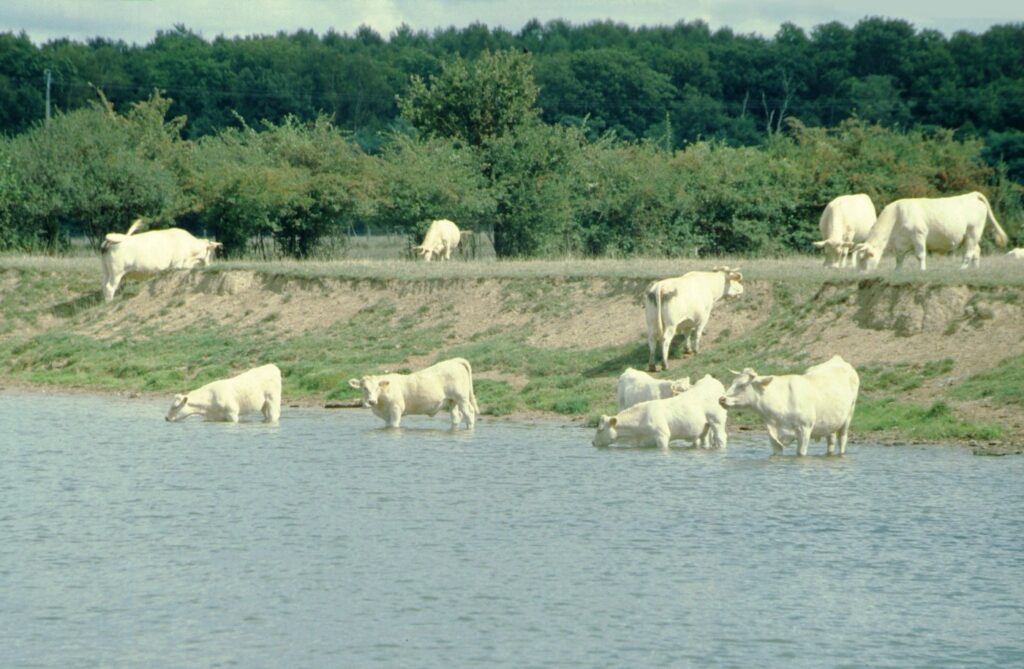
French dairy and beef regions still ship young stock across the EU, and Polish rearing farms keep asking for that flow. If you want a clear route to French calves buyers Poland operators can trust, you need numbers on age, weight, breed mix, and a loading window — not a vague “animals available” note.
We buy calves from France and other EU origins for Polish units. The deal works when the lot matches the rearing plan on arrival: tagged animals, readable health history, and fitness for a longer haul than a local market run. Send a concrete offer to biuro@eurocieleta.pl or call +48 691 900 728.
Why French calves buyers Poland keep looking west
France has deep Charolais, Limousin, and dairy-cross volume. Polish fattening and rearing desks watch those genetics when the frame and muscle fit their finishing plan. Dairy bull calves from western French holdings also fill pen space when local surplus is thin. Demand is selective: buyers want sorted lots, not a random mix off every farm in the département.
Road distance is longer than from Germany or the Netherlands. That is not a blocker when the transporter plans rest, stocking density, and arrival timing. It does mean the lot must be fit before loading — a weak calf that might survive a short hop will not look the same after a full day on the truck. Journey quality is part of the offer, not an afterthought.
EU rules are familiar on both sides. Ear tags, cattle passports, and TRACES movements are standard. You are proving the group is clean and the journey is legal, not inventing a new trade lane. French holdings that already export to other member states usually have the paperwork rhythm; Polish partners verify the same fields every week.
Volume helps when quality holds. A fortnightly programme from the same French supplier beats a one-off surplus dump. Polish farms plan pen groups and feed ahead — they prefer a partner who can name the next loading week.
What your lot sheet must show before collection
Before anyone books a truck, put the facts on one page. Head count, age in days or weeks, live weight range, sex split, breed or cross, and how many you can load in one window. Add the holding’s approval status and who signs the health certificate. If those lines are missing, the buying desk has to chase them — and chasing kills speed on a long route.
Uniformity matters more on French lots because journey cost is higher per head. A tight weight band loads into the same pen group on arrival. A 45–95 kg spread forces split feeding from day one. State the band honestly; do not dress a wide mix as “around 60 kg.” Polish rearing units notice the difference at unload.
Health history should be short and usable: vaccinations already given, recent treatments, any known farm-level issues. “Healthy calves” alone does not help. Named products and dates do. Leave unfit animals home. One weak calf on a France–Poland haul costs more than an empty place on the trailer.
Name the loading site and the earliest ready time. French collection points vary — some farms load at dawn, others after milking. Transporters price waiting time and empty kilometres. A firm window from Saône-et-Loire or Brittany is more useful than “sometime next week.” For how Polish desks read commercial offers, see our note on beef calves for Polish rearing plans — many French lots sit in that beef or crossbred lane.
Papers, TRACES and journey fitness from France
Intra-EU calf movements need identification, a health certificate, and a TRACES notification that matches the animals on the truck. Mismatches between the list and ear tags at the ramp waste a morning — worse when the driver already has a long ETA into Poland. Check tags against the movement document before the truck arrives.
Journey fitness is not marketing copy. Calves must stand, see, and travel without unnecessary suffering under Regulation 1/2005. Bedding, ventilation, and stocking density are part of offer quality, even when the haulier is hired separately. If you organise the truck, say so. If the buyer organises it, say what the farm can provide at loading: water, loading race, lighting, and a contact who answers the phone.
Route planning from French holdings into Poland needs buffer for traffic, weighbridges, and farm access for large trailers. Build that into the ETA you promise the Polish unit.
Country lanes differ in distance and collection habits. German lots often win on proximity to western Polish pens; French lots can win on genetics and sorted beef frames. Compare notes with our German supply route notes if you ship from both origins — same EU paperwork frame, different road times and lot profiles. Pitch the story that matches your holding, not a generic “EU calves” line.
How to send an offer that gets a reply
Open with facts: head count, age, weight band, breed mix, loading region in France, and the week you can ship. Add price basis only if you have one — many first contacts skip price until the lot is checked. A simple table or clear bullets beat a long story. Group photos help when frame or condition need a quick look; photos never replace IDs and weights.
Say whether the lot is one-off or part of a repeating programme. Polish buyers building weekly intake prefer a supplier who can confirm the next two loads. You do not need a year-long contract on day one; you need a credible next date and the same lot format each time.
Use the partners page for the formal route into the buying desk, or check common questions on the FAQ before you write. Then email biuro@eurocieleta.pl with the lot sheet. Phone +48 691 900 728 works for time-sensitive loading questions — keep the first call short and factual.
Subject lines should carry the load, not slogans. “French calves, 35 head, 14–21 days, 50–55 kg, Charolais cross, Burgundy, load Wed” is enough. Fluff slows triage. After a first deal, keep the same columns and units. Consistency cuts TRACES errors and helps the Polish farm’s pen plan. That is how French calves buyers Poland actually keep on the books — as a repeat lane, not a lucky one-off trailer.
If a lot fails selection — wrong weights, weak animals, incomplete papers — ask what to fix next time. Good suppliers adjust the next group; we would rather fix the next load with you than burn a week on excuses.
Supplier in France? See how to sell calves from France to Poland.