
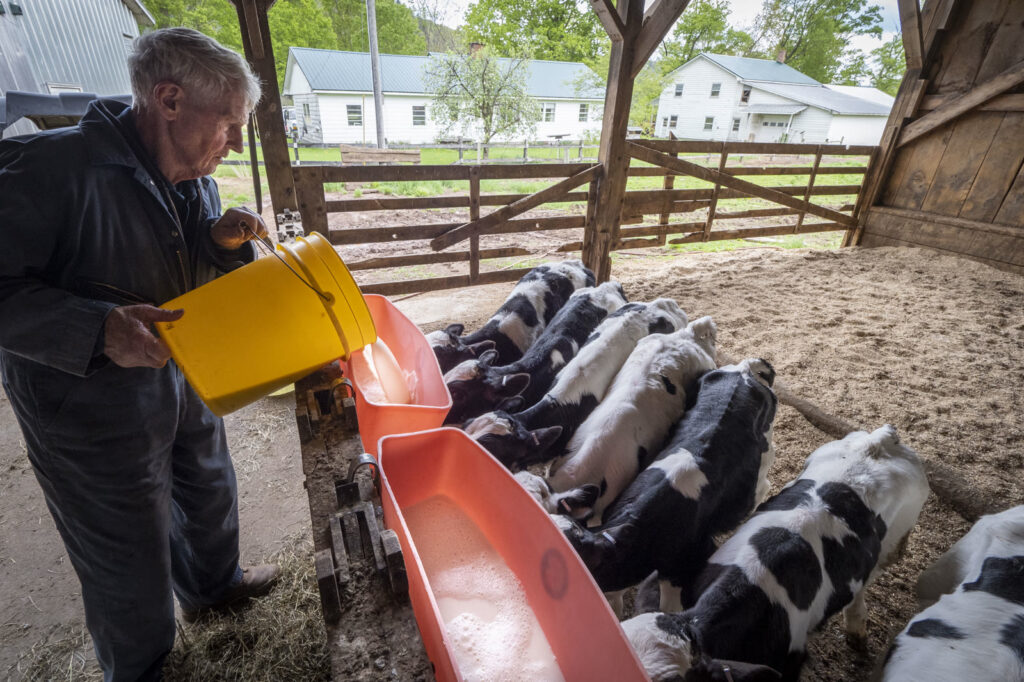
Farms and traders who want to sell livestock online to a foreign buyer often start with the wrong format: a vague message, a photo with no ear tags, and no monthly capacity. A Polish buyer working for farm demand needs a clear written offer — country, breed, sex, calves per month, weight or age, documents ready, and who organises transport. This walkthrough shows how to offer calves through a supplier enquiry form, WhatsApp or phone, in English, Polish or Russian, without guessing what belongs in the first message.
How to Sell Livestock Online to a Polish Buyer
Selling calves across an EU border is not the same as listing animals on a local mart board. The buyer collects under EXW terms with their own trucks, agrees a price per head per lot in EUR, and will not load until the papers are ready. If you already know how to become a calf supplier for Poland, the online step is simply putting the same facts into a structured enquiry.
Euro Cieleta buys for Polish farm demand from foreign farms, traders and exporters. Prefer EU suppliers; neighbouring and export-ready countries are welcome. Ongoing cooperation and repeat lots are preferred over one-offs, though a trial shipment is fine. Languages on the contact channel are English, Polish and Russian. Before you write, check who you are dealing with — company details and buying terms are summarised on the about page and in guides on how foreign cattle buyers should be vetted.
The practical path online is the supplier section of the contact form. Call or WhatsApp works when you already have the numbers ready. Email alone without the form fields usually means a follow-up round that slows the first lot. Keep the first message factual: what you can load, when, and with which papers. Marketing adjectives do not help a buyer plan a truck route from your farm or collection point.
What to Put in the Supply Form
Open the supplier enquiry form and treat each field as part of the first commercial message. Under “who you are”, state the country where the calves are held, farm or company name, contact person, email, phone and WhatsApp if you use it, plus preferred language (EN, PL, RU or other). Under “the calves”, fill breed, sex (heifer, bull or mixed), calves per month, weight or age, whether documents are ready, who organises transport, and any short notes.
Breed options on the form cover Holstein Friesian / dairy, dairy crosses, Limousin, Charolais, Angus, Hereford, Simmental, Belgian Blue, beef crossbreeds, mixed lot and other. Sex should match what you can actually load; mixed lots are accepted when you say so upfront. Calves per month tells the buyer whether you can support regular cooperation or only a single trial. Weight and age belong together: dairy calves often sit in the indicative 52–90 kg window, starter calves 110–150 kg, and weaned or stocker calves (beef breeds only) 220–350 kg — other specs are agreed per lot. Send age, weight and ear-tag numbers with the offer when you have them. Photos help only when the tags are readable and the group looks uniform enough for one lot description.
Documents ready means every animal is individually identified with ear tags and a bovine passport or identification document, and that you can arrange the EU INTRA animal health certificate in TRACES NT with the official veterinarian before dispatch. No loading before that certificate is issued. On transport, the buying side organises collection with its own trucks under EXW (collect at your farm or collection point). The form still offers “to be agreed / I organise / Euro Cieleta organises” so you can flag a constraint; the published trade terms remain EXW and own-truck collection. Full buying rules sit on how we buy.
Country pages under suppliers list the same form with local notes for eleven source countries, including the certifying authority that issues the INTRA certificate. Partnership expectations — repeat lots, trial shipments, languages — are also on the partners page. Use those pages to check fit before you hit “Send my offer”.
Documents, Lot Size and Transport Before You Hit Send
Minimum lot size depends on journey length. TYPE 1, transport up to eight hours’ drive: minimum 28 head. TYPE 2, long-distance trailer transport: minimum 150 head. Payment terms and trial-lot size are agreed individually before the first loading. Currency is EUR; there is no published price list — price per head is agreed per lot. Do not invent a load size below the minimum hoping the truck will still come; empty space on a long journey is rarely acceptable.
Transport runs under Council Regulation (EC) No 1/2005: authorised transporter, approved vehicle, certified driver, and a journey log on long journeys (as of 2026-11-07, named in plain text from the buying terms on the site). The INTRA certificate follows Delegated Regulation (EU) 2020/688 and is created in TRACES NT by the official veterinarian in the country of dispatch. Ear tags and passports must match the animals on the truck. If papers are incomplete, say so in the notes field rather than promising a load date you cannot keep.
When the form is filled, submit it. If you prefer a short call, use +48 691 900 728 (phone and WhatsApp) or email biuro@eurocieleta.pl during Monday–Friday business hours, Europe/Warsaw. Bring the same fields you would put in the form: country, breed, sex, monthly capacity, weight or age band, document status and transport preference. A clean first message is what turns an online enquiry into a workable lot for both sides.