
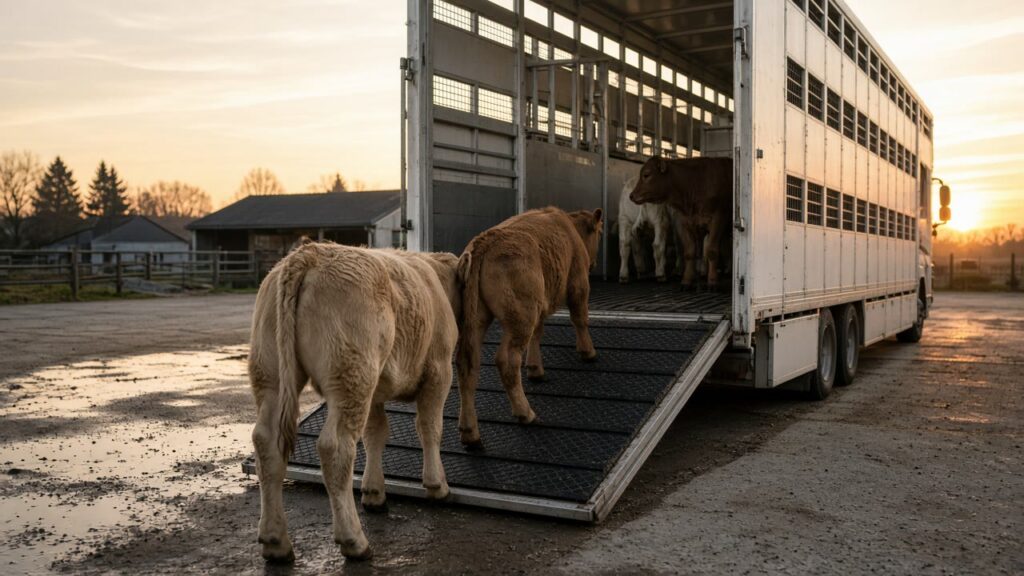
If you plan to export calves to Poland, treat the move as a B2B supply job, not a last-minute truck fill. Polish farms and buyers pay for healthy animals that arrive with clean ID, valid veterinary paperwork, and a transport plan that respects EU rules. Weak files delay unloading. Overpromising on age, weight, or health kills the next order.
Euro Cieleta buys calves for the Polish market. We work with foreign farms, traders, and exporters who can ship repeatable lots. This guide is a practical checklist for suppliers who want to export calves to Poland without burning trust on the first load. For partnership basics on our side, see how to work with a Polish calf buyer.
What “export calves to Poland” means in practice
Intra-EU calf trade is common, but Polish buyers still filter hard on documentation and logistics. In this context, “export” usually means an intra-Union movement into Poland under animal health rules — not a paperwork-free handshake. Your holding must be registered. Animals need correct identification. An official veterinarian must certify the consignment in TRACES NT before departure. The transporter must be authorised for the journey length and species.
Polish intake teams check whether the animals on the truck match the certificate. Ear tags, cattle passports or national ID documents, and the TRACES data must tell the same story. If they do not, the lot stalls — and your buyer remembers.
Demand covers both beef-oriented and dairy-oriented calves, but specs vary by farm. Agree breed type, sex mix if relevant, age or weight windows, and health expectations in writing before loading. A vague “good calves” offer is hard to book and harder to defend when something goes wrong. Clear specs protect both sides when the ramp goes down.
Seasonality also matters. Spring and autumn often bring more available calves in some EU regions, while Polish rearing and finishing demand follows farm housing and feed plans. Ask your buyer what volumes they need by month, not only by headline price. A supplier who can flag capacity four to six weeks ahead is easier to put on a regular schedule.
Documents and checks before the truck leaves
Build a document pack early. Rushing certificates the morning of loading is how mismatches happen. Operators who export calves to Poland regularly keep a standing checklist and reuse it for every departure.
- Holding registration — animals should leave a registered establishment with traceable ownership and movement history.
- Animal identification — ear tags (and any required cattle passport / ID document) must match the animals loaded, tag for tag.
- TRACES NT animal health certificate — Part I prepared by the operator; official veterinarian certification before departure. Numbers, species, and destination must be exact.
- Transporter authorisation — use a carrier registered for livestock journeys of the planned duration; welfare rules are not optional.
- Buyer intake details — delivery point, contact on arrival, and any farm-level receiving requirements agreed in advance.
Keep copies of what you sent and what was certified. When a Polish buyer asks for clarification, speed matters. Partners who answer with facts in RU, PL, or EN clear issues faster than those who go silent for a day. If you need a direct line while a load is moving, use our contact page.
Health expectations should be plain language: vaccination or testing history you actually have, recent treatments if relevant, and any animals excluded from the lot. Do not bury weak animals in a good load. One bad arrival can end a supplier relationship that took months to open. If an animal drops out after certification, tell the buyer before arrival so the headcount on paper still matches the truck.
Also confirm who pays for what: veterinary certification, TRACES fees, loading labour, and transport. Surprises on the invoice create as much friction as surprises at the gate. Put the commercial terms next to the animal specs so finance and farm teams are aligned.
Logistics, lot design, and how to work with a Polish buyer
Logistics is where many otherwise good exports fail. Plan loading density, journey time, rest stops where required, weather, and a realistic ETA. Share updates early if the truck is delayed. Polish farms schedule labour and housing around arrival windows; a surprise midnight truck is not a favour. For route timing and stress points on the road, read our notes on planning European calf transport.
Design the lot the buyer can use. Agree in writing:
- breed orientation (beef, dairy, or defined crosses)
- age or live-weight band
- headcount and whether split deliveries are possible
- loading site and preferred departure days
- who books transport and who pays which legs
Price matters, but it is rarely the first filter. Capacity, document quality, and on-time delivery decide whether you get a second booking. A trial lot is normal. Prove the paperwork and the animals once, then scale to regular supply. After the trial, review what worked: certificate timing, loading speed, mortality or welfare notes on arrival, and payment terms. Fix the weak step before you double volume.
When you pitch, send a short structured offer: country of origin, monthly capacity, breeds, typical docs, transport options, and the earliest ship date. Photos help only when they match the actual lot. For how Polish buyers read commercial offers, see what buyers check before they take calves — different angle, same market.
Communication cadence keeps routes alive. Confirm the lot 48–72 hours before loading, send the final headcount and tag list when available, and provide a live contact for the driver. If border or inspection delays happen, a single honest update beats radio silence. Buyers who trust your updates will give you priority when they need calves quickly.
If you want a standing channel into Polish farm demand, start on the Partners page. Tell us origin, capacity, breeds, and document readiness. We reply with clear next steps. Contact: biuro@eurocieleta.pl · +48 691 900 728 (RU / PL / EN).
Bottom line: to export calves to Poland well, align animals, TRACES paperwork, and transport before the ramp goes up. Do that consistently and Polish buyers will treat you as supply — not a gamble.