
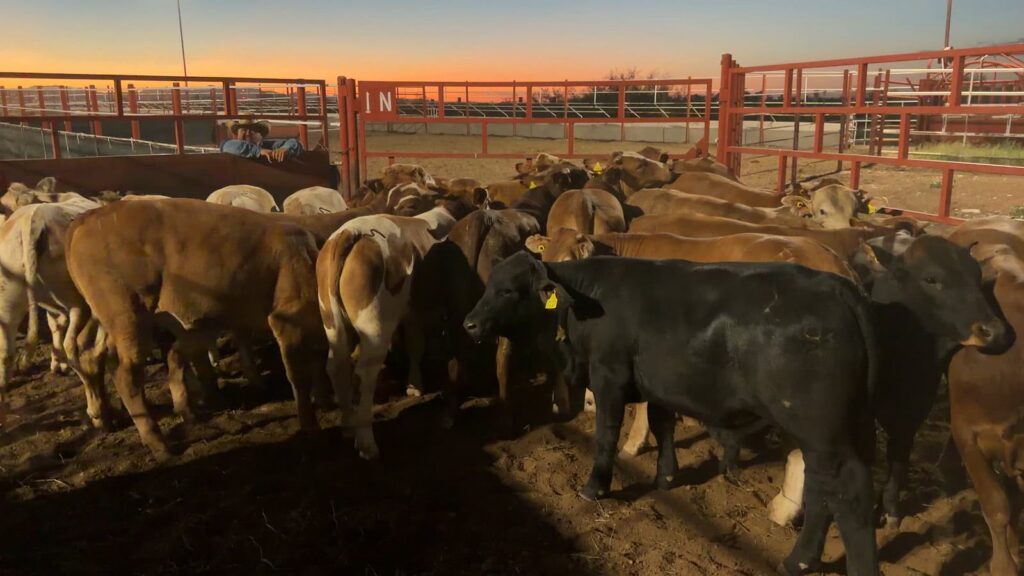
Most guides on how to export livestock are written for ships, quarantine stations and third-country protocols. Selling calves from one EU country to another is a shorter road, but it follows a fixed order of identification, health certification and transport that nobody gets to skip. Here is that order as it looks from the seller’s yard.
If you are new to cross-border sales, it helps to know where calves move inside the EU and why first. This post sticks to the steps.
What has to be in place before the first lot
Three things exist before any buyer talks to you about a load: a registered holding, identified animals and an official veterinarian who knows you plan to sell abroad.
Your holding must be registered with the national veterinary authority. If you trade calves bought in from several farms, ask your local office how your premises should be registered; a single farm and an assembly operation are not treated the same way.
Every animal must be individually identified with ear tags and a bovine passport or national identification record, depending on the country. The EU rules on cattle identification sit in Regulation (EU) 2016/429 and Delegated Regulation (EU) 2019/2035. A buyer will ask for ear-tag numbers with the first offer, because those are what the official veterinarian checks before signing anything.
The third piece is the official veterinarian. In Germany that is the local Veterinäramt, in Ireland DAFM, in the Netherlands NVWA, in Lithuania VMVT. Ask early how much notice they need for an INTRA certificate. That one answer often decides how fast you can sell.
How to export livestock to another EU country, step by step
Once the basics are there, the sequence for a calf lot is much the same in all eleven countries where we buy. Office names change. The order does not.
- Agree the lot on paper. Breed, sex, number of head, age and weight, the collection point and the date. Our indicative weight classes are 52–90 kg for dairy calves, 110–150 kg for starter calves and 220–350 kg for weaned beef calves; the exact spec is agreed per lot. Price per head is agreed per lot too, in EUR, on an EXW basis. Payment terms are settled before the first loading, not after it.
- Select and check the animals. Pull the calves that match the agreed spec, check tags against passports and leave out anything that is not fit to travel. Under Council Regulation (EC) No 1/2005 an injured, weak or too-young animal stays at home, and both the driver and the vet will refuse it at the ramp.
- Book the certificate. The official veterinarian creates the INTRA animal health certificate in TRACES NT, the European Commission’s system, under the movement rules of Delegated Regulation (EU) 2020/688. The vet checks the animals and the health status of the holding. For the detail, we have written up how the INTRA certificate is raised in TRACES NT, including who issues it in each supplier country.
- Plan the transport. The transporter needs an authorisation, an approved vehicle and drivers with a certificate of competence. Journeys over eight hours also need a journey log. For us, journey length also sets the minimum lot.
- Load only after the certificate is signed. No signed certificate, no loading. The certificate travels with the animals, and the authority at destination is notified through TRACES NT.
- Close the file. Report the departure to your national cattle database as your country requires, and keep copies of the certificate and passports.
No customs, no import permit, no quarantine: that is what separates an intra-EU sale from trade with third countries.
Who does what when the calves leave your farm
On an EXW deal the line between seller and buyer is clear, but write it down anyway.
The seller prepares the animals and the papers: tagged calves, passports, the signed INTRA certificate and a loading place a truck can actually reach. The buyer brings the transport. When we buy, we collect with our own trucks, so the authorisation, vehicle approval, driver competence and journey log are our job, not yours. You do not need a haulier, and you do not need to build one into your offer.
Distance shapes the lot. For collections up to eight hours’ drive (TYPE 1) our minimum is 28 head. For long-distance trips with a trailer (TYPE 2) the minimum is 150 head. A seller within a day’s drive of western Poland may fit a TYPE 1 load; one further away usually needs to pool calves for a full trailer. The full terms, with a supplier checklist, are on our page on how we buy calves.
Where first-time sellers lose time
Most delays we see have little to do with the law. They come from timing and loose ends:
- The vet appointment is booked after the truck, not before. The truck waits.
- Tag numbers in the offer do not match the passports. One wrong digit holds up the whole certificate.
- The lot drifts from what was agreed: a few older animals, a different breed slipped in.
- Nobody checked the loading place. A long trailer cannot turn in every farmyard.
None of this is hard to fix. It needs one person on your side who owns the date, the vet and the list of ear tags. Breed, sex ratio and weight window are easier to settle against the breed pages we use for lot specs than over a bad phone line, and the usual questions on documents, lot sizes and payment are covered in our supplier FAQ.
Starting with a trial lot
For a first sale abroad, a trial lot is the honest way to test the whole chain: your vet’s turnaround, the paperwork, the loading and the condition of the calves on arrival. Payment terms and trial-lot size are agreed individually before the first loading. After that, regular lots are what we want to build.
If you sell calves in one of the countries we buy in, send the basics through the supplier offer form: country, breed, sex, calves per month, age and weight, and which documents are ready. You can also call or WhatsApp +48 691 900 728 or write to biuro@eurocieleta.pl. To see what we expect from long-term suppliers first, read our partner requirements.
Sources: EUR-Lex texts of Regulation (EU) 2016/429, Delegated Regulation (EU) 2019/2035, Delegated Regulation (EU) 2020/688 and Council Regulation (EC) No 1/2005; European Commission information on TRACES NT. As of 9 November 2026. Notice periods and national procedures vary, so confirm them with your official veterinarian.