
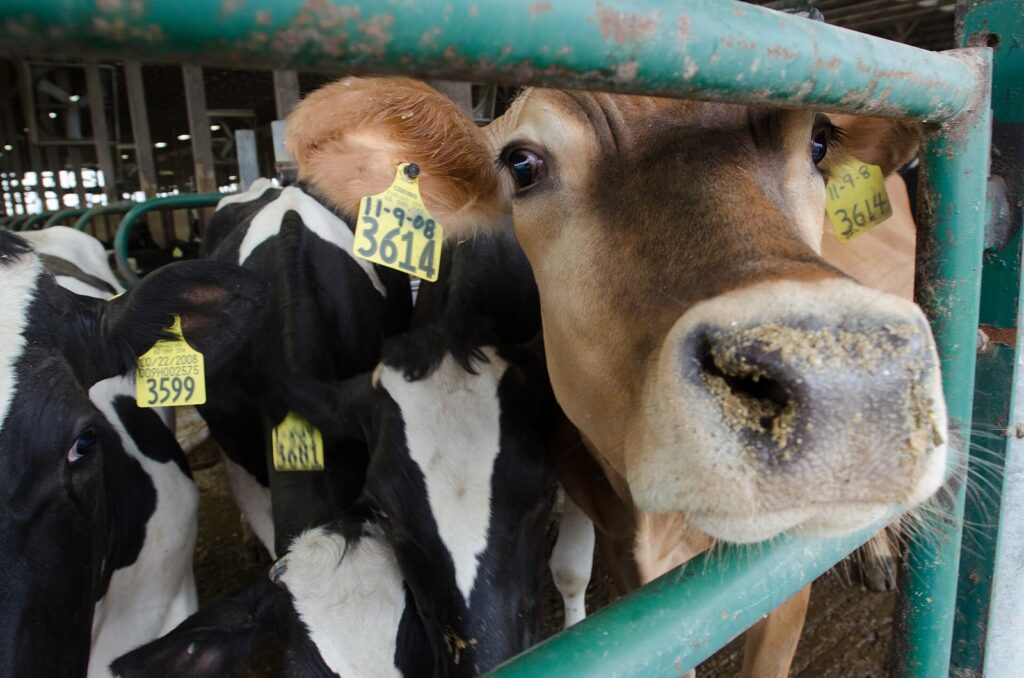
The rules for bluetongue calf movement between EU Member States change on 1 November 2026. If you sell calves into Poland, the change lands on one document: the INTRA animal health certificate your official veterinarian signs in TRACES NT. The routine stays the same; what the vet has to confirm about bluetongue does not.
This note covers only bluetongue. For papers, ear tags and timing in general, see our wider veterinary checklist for calves going to Poland. Everything below comes from the official texts listed at the end, as of 13 October 2026. Your competent authority has the final word on how they are applied.
What changes for bluetongue calf movement on 1 November 2026
Three EU acts work together. Commission Implementing Regulation (EU) 2026/169 moves infection with bluetongue virus (serotypes 1-24) from category C+D+E to category D+E. The category C tools, optional eradication programmes and disease-free status, no longer apply to bluetongue.
The movement rules referred to those programmes, so they were rewritten. Delegated Regulation (EU) 2026/795 amends Delegated Regulation (EU) 2020/688, which sets animal health conditions for moving animals between Member States. For cattle, the key line is Article 10(1)(f): the animals must meet at least one set of bluetongue requirements in Part 1 of a new Annex IX, unless a derogation under Article 13 applies.
Implementing Regulation (EU) 2026/1127 then updates the model certificates in Implementing Regulation (EU) 2021/403, including BOV-INTRA-X, the model for bovine animals not intended for slaughter, and BOV-INTRA-Y. The amended movement rules and the new certificates apply from 1 November 2026. A Polish district veterinary inspectorate confirmed that date for the category change on 9 October 2026.
One simplification matters for sellers: the country of destination can no longer accept cattle without any bluetongue conditions at all, an option the Commission says was rarely used.
The three routes the official vet can certify
Annex IX, Part 1 gives the vet a short menu. A calf for rearing must meet one set.
Route 1: origin area without bluetongue
The calf has been kept for the last 60 days before departure, or since birth if it is younger than 60 days, in establishments within an area of at least 150 km radius where bluetongue has not been reported in listed species during the last two years. It must not have had a live bluetongue vaccine in that time. The “since birth” wording matters for young dairy calves, often sold under 60 days old.
Route 2: bluetongue reported nearby, plus one safeguard
If bluetongue was reported within that 150 km radius in the last two years, the calf needs one of these:
- Kept in a seasonally vector-free area for 60 days before departure (or since birth), or for 28 days with a negative serological test, or for 14 days with a negative PCR test, sampled after the start of that period.
- Kept in a vector-protected establishment on the same 60, 28 or 14-day basis. The building must meet the Annex IX requirements, verified by the competent authority.
- Vaccinated against all serotypes reported in that area in the last two years and within the immunity period, either at least 60 days before departure, or with an inactivated vaccine plus a negative PCR test at least 14 days after onset of immunity.
Route 3: the derogation the destination has to open
Under the new Article 13, the authority of origin may also authorise movements meeting a lighter set in point 3 of Annex IX, such as vaccination against the serotypes reported in the area, or measures required by the country of destination. This only works if the destination Member State has told the Commission and the other Member States that it accepts such movements. The European Commission lists those notices on its bluetongue rules page. Check it with your vet before planning a lot this way; we do not assume it is open for Poland.
What to check before a lot is offered
The 60, 28 and 14-day periods count back from departure, so the work starts weeks before loading.
- Ask your official vet now which route your area falls under after 1 November 2026.
- Record vaccination dates, vaccine type and serotypes per animal, next to the passports.
- If a PCR or serology test is needed, set the sampling date so the result is back before loading day.
- Avoid adding calves from other holdings late if that breaks the 60-day residence period.
- Send age, weight and ear-tag numbers with the offer, as for any lot.
Our supplier checklist (PDF) covers the general documents; add the bluetongue route as its own line.
An Irish lot as a worked example
Take an Irish seller preparing dairy bull calves for Poland. The INTRA certificate is issued in TRACES NT by an official veterinarian of the Department of Agriculture, Food and the Marine (DAFM). The vet checks where the calves were kept, whether bluetongue was reported within 150 km in two years and their vaccination, then certifies the matching option on BOV-INTRA-X. The rest of the file is unchanged. Our Irish supplier page lists what we buy there and the usual papers.
How we handle the certificate on our side
Our position does not change: no loading before the certificate is issued. We buy EXW and collect the calves at your farm or collection point with our own trucks, fixing the loading date with you once the vet has confirmed the route. Transport runs under Regulation (EC) No 1/2005, with an authorised transporter, an approved vehicle and a certified driver. The transport rules under Regulation 1/2005 are covered separately.
Lots start at 28 head for trips of up to 8 hours’ drive and 150 head for long-distance trailer loads. Weights are indicative and the specification is agreed per lot, with a price per head in EUR. Full terms are on how we buy calves, and how we work with partner farms describes regular supply. If you want to know who you would be dealing with, Euro Cieleta is a registered Polish company based near Gostyń.
If your vet has confirmed the bluetongue route for your calves, put it in the notes when you send the lot details through the supplier form. You can also call +48 691 900 728 or write to biuro@eurocieleta.pl.
Sources, as of 13 October 2026: Commission Implementing Regulation (EU) 2026/169; Commission Delegated Regulation (EU) 2026/795 amending Delegated Regulation (EU) 2020/688; Commission Implementing Regulation (EU) 2026/1127 amending Implementing Regulation (EU) 2021/403 (EUR-Lex); European Commission, DG SANTE, “Bluetongue rules” page; Polish Veterinary Inspection, district inspectorate notice of 9 October 2026 on the bluetongue category change. General information only, not legal or veterinary advice.