
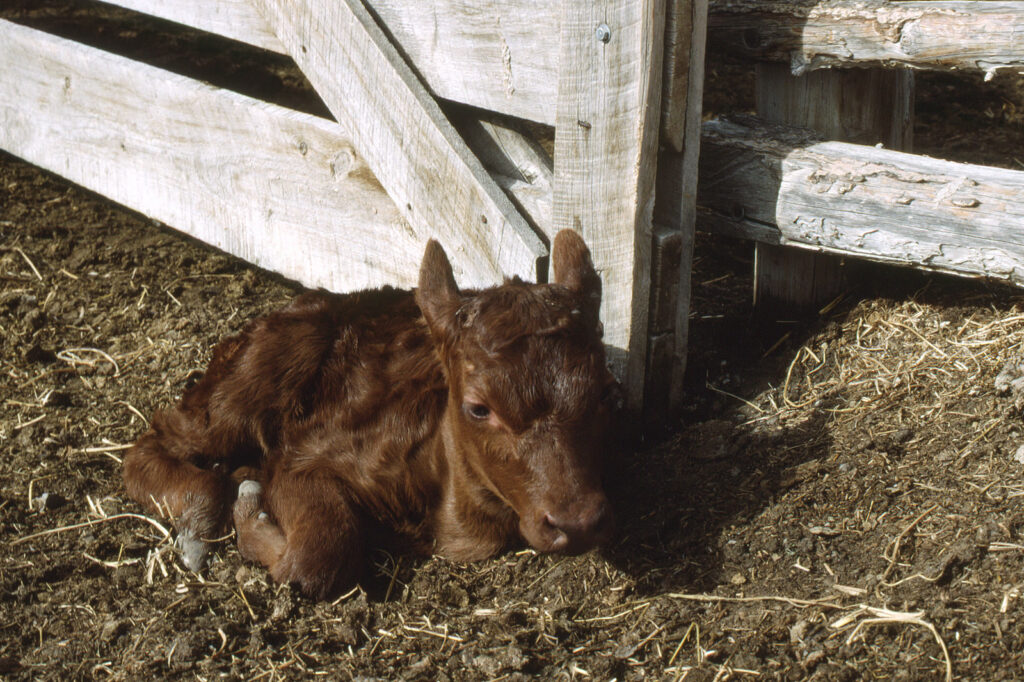
If a buyer quotes you “EXW” for a lot of calves and you want the plain ex works price meaning, it is this: the price is for the animals at your farm or collection point, and the trip from your gate onwards is the buyer’s cost and the buyer’s problem. For a seller abroad, it changes how you compare offers and where your responsibility stops. With live animals a few practical points matter more, because calves cannot wait in a warehouse until the paperwork catches up.
What ex works means under the Incoterms rules
Ex Works is one of the eleven Incoterms rules published by the International Chamber of Commerce. Under the 2020 edition, the seller delivers when the goods are placed at the buyer’s disposal at a named place, usually the seller’s own premises. The goods do not have to be loaded onto the collecting vehicle, and from that moment the buyer carries the costs and the risk.
That makes EXW the rule with the least work for the seller. You prepare the goods, make them available on the agreed day and help the buyer with the information and documents they need. Carriage and the route are the buyer’s side.
The named place matters. “EXW farm” and “EXW collection point” are two different deliveries, so the address should be written into the agreement, not left to a phone call the week before.
Ex works price meaning for a calf lot
An EXW price per head is a farm-gate price. It has no freight inside it, no driver’s time and no allowance for the distance to the buyer’s country. So when you set an EXW quote next to a delivered quote from someone else, you are not comparing like with like. The delivered figure has transport built in; the EXW one does not, and you do not pay for the trucks.
On our trade terms for suppliers the basis is stated in one line: prices and payments in EUR, price basis EXW, and we collect the calves at your farm or collection point with our own trucks. There is no published price list. The price per head is agreed per lot, because breed, sex, weight class, documents and lot size all move it.
For you, that means two things. You do not need to find a haulier, and you do not need to price in a journey you cannot control. Your job is to have the right animals, in the right condition, with the right papers, at the agreed place and time.
Who does what on collection day
EXW does not mean the seller simply opens the gate. Before any calf goes on a truck, the paperwork has to be complete. Every animal must be individually identified with ear tags and have its bovine passport or identification document. The EU INTRA animal health certificate is created in TRACES NT and certified by the official veterinarian before dispatch, as Delegated Regulation (EU) 2020/688 requires. No loading happens before the certificate is issued.
On the buyer’s side sits the transport. Ours runs under Council Regulation (EC) No 1/2005: authorised transporter, approved vehicle, driver with a certificate of competence, and a journey log for long journeys. Lot size follows the truck type. For TYPE 1 transport, up to 8 hours’ drive, the minimum lot is 28 head. For TYPE 2, long-distance transport with a trailer, it is 150 head. If you are unsure how a mixed group splits across a load, our note on how a lot is grouped for the truck covers space allowances.
The supplier checklist (PDF) lists the documents in the order they are usually checked.
Where risk and loading sit
Under the strict Incoterms wording, the seller has no duty to load under EXW, and risk passes once the goods are at the buyer’s disposal. With cattle that is rarely how it plays out in the yard. Someone has to walk the calves up the ramp, and it is often easier for the farm’s own staff to do it, since they know the animals and the layout.
The ICC itself notes that if the seller loads, FCA may describe the deal better. In livestock trade the practical answer is to agree it in advance: who drives the calves onto the truck, when ownership and risk change, and what happens if an animal is unfit on the day. Payment terms and the size of a trial lot are also agreed with each supplier individually, before the first loading.
EXW compared with FCA and delivered terms
A short comparison for buyers who use different terms:
- EXW: the price is at your farm or collection point. The buyer collects, transports and carries the risk from delivery.
- FCA: you hand the animals to the buyer’s carrier at a named place. If that place is your farm, loading is your job.
- Delivered terms (DAP and similar): you organise and pay for transport to the buyer’s farm, and the risk travels with you.
For intra-EU calf lots, export customs clearance is not the issue. The veterinary certificate, the ID papers and the transport rules are. That is why EXW suits cross-border calf sales: whoever has the trucks handles the journey, whoever has the animals handles the farm side. The supplier questions in our FAQ give the same terms in short form.
Putting an EXW offer together
An EXW offer is easier to agree when the buyer can see the lot clearly before talking about price. Send the age, weight and ear-tag numbers with the first message, plus the breed, sex, number of calves and the exact collection address. Weight ranges on our side are indicative (dairy calves 52 to 90 kg, starter calves 110 to 150 kg, weaned beef calves 220 to 350 kg), and the final spec is agreed per lot.
If you sell in one of the eleven countries we buy in, the country page names the official veterinary authority that issues the certificate. Our guide on what to put in a first offer goes through the details buyers ask for most often.
If you can supply lots on a regular basis, a supply partnership with Euro Cieleta keeps collection dates predictable. To start, use the supplier form, call +48 691 900 728 (phone and WhatsApp) or email biuro@eurocieleta.pl. We work in English, Polish and Russian.
Sources: International Chamber of Commerce, Incoterms 2020 rules (EXW and FCA); Council Regulation (EC) No 1/2005; Commission Delegated Regulation (EU) 2020/688 (EUR-Lex). As of 20 October 2026.