
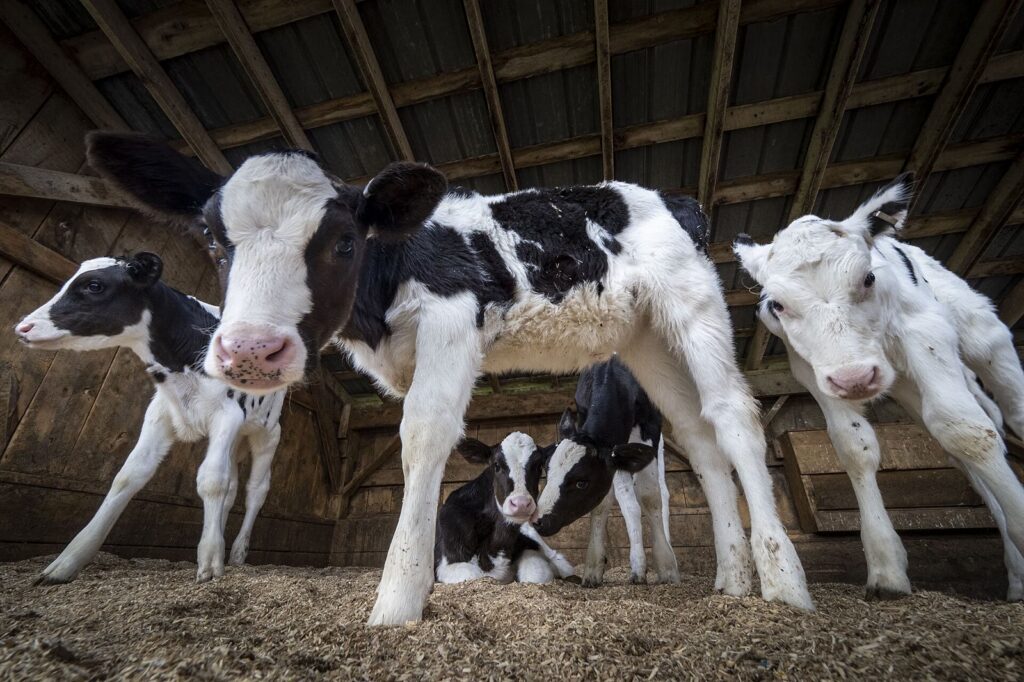
Beef on dairy calves have moved from a side line to a normal part of the calf crop on many dairy farms, and the sale needs a little more thought than a plain Holstein bull. A cross calf is bred for meat from the day the straw goes in, so the buyer on the other end looks at it as a fattening animal first. What the sire was, how evenly the group looks and how clearly the lot is described decide how quickly it finds a place on a rearing farm.
Why beef on dairy calves sell differently from pure dairy bulls
A pure Holstein bull calf is a by-product of milk. It goes to veal or to a bull unit that accepts a slower, leaner animal. A cross out of the same cow by a beef bull is a different proposition. The beef sire adds muscle and a better carcass shape; the dairy dam adds early vigour and appetite. Rearers who fatten bulls tend to see a well-bred cross as the easier animal to finish.
Not every cross sells itself, though. A mixed pen of five sire breeds at different ages is hard to plan around. The farms that do well with crosses are the ones that treat them as a product line: one or two sire breeds, steady numbers, and a short written description that does not change from one load to the next.
The sire decision shows up in the calf pen
Most beef-on-dairy programmes start with a simple split. The best cows get dairy semen, often sexed, to breed replacements. The rest are served with a beef bull. The choice of that bull is where the sale of the calf really begins, months before it is born.
Belgian Blue
The Belgian Blue is known for extreme muscling, and on a Holstein cow it gives a calf with visible shape from the first weeks. Fatteners like that. The trade-off is calving: many herds keep Belgian Blue for mature cows and use an easier-calving sire on heifers. A blue or white-roan coat makes the cross easy to recognise in a mixed shed.
Angus and Hereford
An Aberdeen Angus sire is the usual choice where calving ease matters. Angus-cross calves out of Holsteins are mostly black and often polled, which keeps a group uniform to look at. Hereford crosses usually show the white face and are docile to handle. Both are British breeds that mature earlier than the continental ones, so they suit rearers who finish at lighter weights.
Limousin and Charolais
Limousin and Charolais crosses bring a larger frame and more growth, and they are common in the French, Irish and German calf trade. Colour varies more, so state the sire breed clearly rather than leave the buyer to guess from a photo.
Which sire is “best” depends on where the calf is going. Our older piece on matching calves to rearing goals goes into that choice from the buyer’s side.
How to describe a cross lot so it can be placed
The quickest way to lose time on a cross lot is a vague first message. A buyer cannot plan pens, feed or trucks around “about 40 mixed crosses”. What helps is the same short set of facts every time:
- sire breed and dam breed for each group (for example Belgian Blue x Holstein, Angus x Holstein);
- number of head per group and the split between bulls and heifers;
- age range in days and weight range in kg, with actual weights where you have them;
- how the calves were fed and housed, and any treatments given;
- ear-tag numbers and the week you can load.
Mixed lots are fine as long as each group is counted and named. What rarely works is one figure for the whole lot with no breakdown. The breed recorded on each calf’s passport should also match the description in the offer; a buyer checking papers at loading will notice if it does not.
Our page on beef-dairy and beef crossbreeds lists what we look for in these lots and the source countries they usually come from.
Weight class, papers and lot size
Most beef on dairy calves are traded young, in the dairy-calf class we list at 52 to 90 kg. Some sellers rear them on to the starter class of 110 to 150 kg before sale. Weaned or stocker calves of 220 to 350 kg are a separate class and, on our side, beef breeds only. These ranges are indicative; the actual spec is agreed for each lot.
The paperwork is the same as for any calf going to Poland. Every animal carries its ear tags and a bovine passport or identification document. Before dispatch the official veterinarian in your country certifies the EU INTRA animal health certificate in TRACES NT, and nothing is loaded before that certificate is issued. Transport runs under Council Regulation (EC) No 1/2005.
On lot size, we work with two minimums. For journeys of up to eight hours’ drive (TYPE 1), the minimum is 28 head. For long-distance transport by trailer (TYPE 2), it is 150 head. A farm with a steady monthly run of crosses can often fill a TYPE 1 lot alone.
The supplier FAQ answers the usual questions on these points, including what to send with a first offer.
Selling crosses to a Polish rearer
We buy for rearing and finishing farms in Poland, and crosses are a regular part of that demand. The terms are simple. The price basis is EXW: we collect the calves at your farm or collection point with our own trucks, so you do not have to organise transport. Prices and payments are in EUR. There is no price list; the price per head is agreed for each lot, and payment terms and the size of a trial lot are settled with each supplier before the first loading. The full terms are on how we buy.
Repeat supply matters more to us than one large load. A farm or trader that can offer the same cross, at a similar age, month after month, is the partner we want to plan around. If that describes your calf crop, the partner page explains how cooperation usually starts.
To make an offer, use the supplier form and pick the breed option that fits (Belgian Blue, Angus, Limousin, beef crossbreeds or mixed lot), or write to biuro@eurocieleta.pl. You can also call or send a WhatsApp message to +48 691 900 728.