
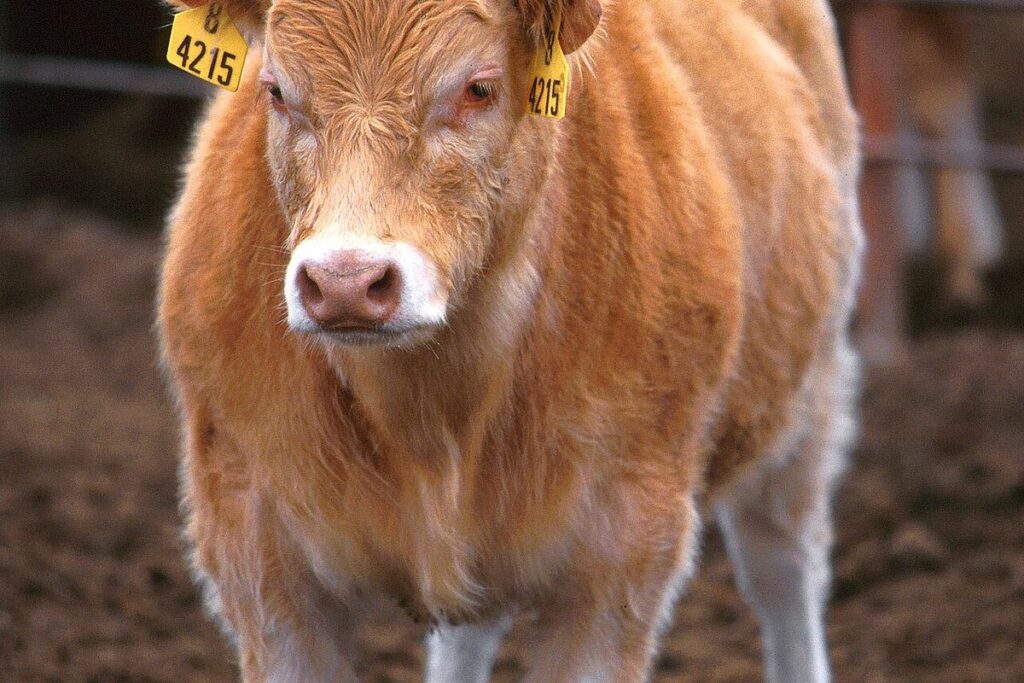
Crossbred calves make up a large share of what dairy regions can offer. A beef sire on a dairy cow gives the calf a clear purpose, and for many farms that is the most practical calf to buy. This page covers how we treat crosses and what makes a mixed lot saleable.
What a cross means in practice
A beef-dairy cross is typically a calf out of a Holstein or another dairy cow by a beef bull such as Limousin, Charolais, Belgian Blue, Angus or Hereford. Beef crossbreeds can also mean a calf from a beef cow by a different beef breed. The result varies by sire and dam, so one label such as “Limousin cross” can describe quite different animals. The more precisely a lot is described, the easier it is to place.
Typical use
Crosses are bought mainly for fattening. The dairy dam adds early vigour and a feed-converting frame; the beef sire adds muscling and carcass quality. Heifer crosses may stay as beef-herd replacements. Buyers compare crosses against purebred beef calves on price and on growth in the first months. See matching beef and dairy calves to rearing goals for how rearing goals decide the choice.
What we buy
We buy beef-dairy and beef-cross calves in the weight bands below. A good offer names the sire breed, the dam breed, sex, age, weight and whether calves were fed and housed together. Mixed lots with several sire breeds are fine if each group is counted and described, but we cannot place a lot labelled only “mixed beef cross”. Our weight bands are 52–90 kg for dairy calves, 110–150 kg for starter calves and 220–350 kg for weaned or stocker calves, the last for beef breeds only. Put exact weights, ages and ear-tag numbers in your offer.
Where the calves come from
Cross calves come from dairy-intensive regions: Ireland, the Netherlands, Germany and France above all, and increasingly from other listed countries. See Ireland, the Netherlands, Germany and France. Our notes on what dairy calf buyers in Poland expect explain how the dairy side sees the same animals.
Offering a Beef-dairy and beef crossbreeds lot
The most useful first message is short and complete: country and region, breed and cross, number of head, sex split, age and weight range, feeding and health history, ear-tag numbers, the documents available and the week you can load. We buy for rearing and finishing farms in Poland, and we start with a trial lot where a new supplier is involved. Payment and trial terms are agreed with each supplier. Read how we buy for price basis, transport and minimum lots, then send your offer through the supplier form or the partner page. You can also write to biuro@eurocieleta.pl or call +48 691 900 728.
Other breeds: Holstein Friesian, Limousin, Aberdeen Angus, or see all cattle breeds.
Photo: Piedmontese-Hereford crossbred calf.jpg by Keith Weller, Public domain, via Wikimedia Commons.
