
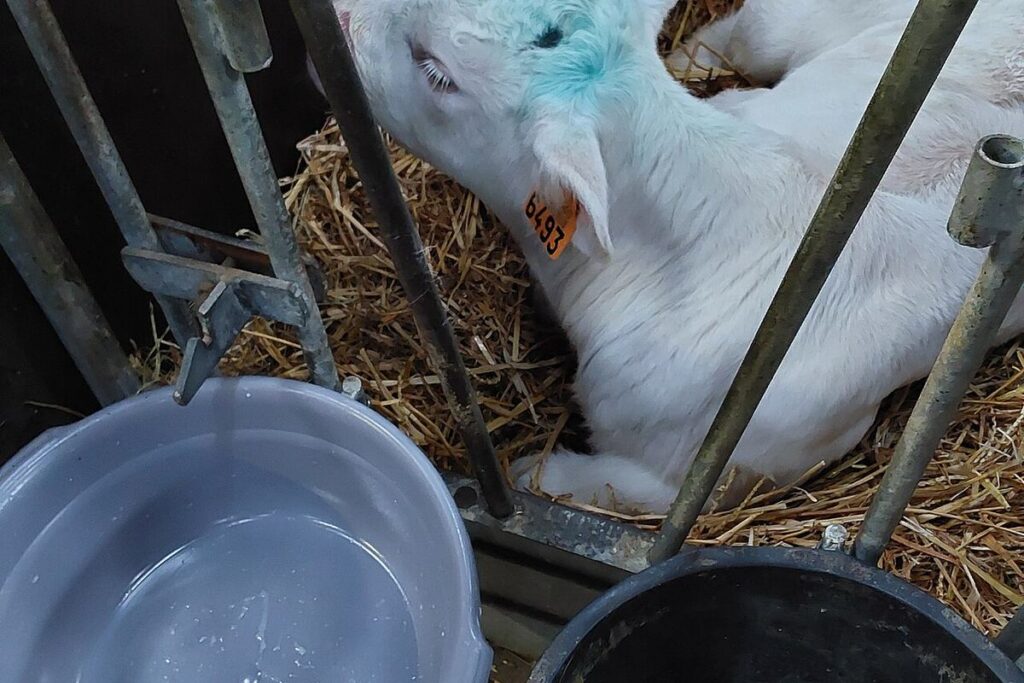
Belgian Blue calves sell on conformation: heavy hindquarter, wide loin, and a white-blue or mottled coat that buyers recognise at a glance. What they do not buy on is a photo alone. A lot can be a purebred Belgian Blue suckler calf, a dairy × Belgian Blue cross from a Holstein or Montbéliarde dam, or a mixed group that only looks muscular until it steps off the truck. This page is a sourcing brief for farms and traders who want to place Belgian Blue and Belgian Blue-cross calves in Poland: where supply comes from, which ages and weights work, what buyers check for double-muscling and vitality, and how to keep health files and transport from spoiling a strong lot.
Where Belgian Blue supply for Poland comes from
The breed is rooted in Belgium (Blanc-Bleu Belge), with strong commercial use in France, the Netherlands, and Germany through AI sires on dairy and suckler cows. Most lots reaching Polish rearing and finishing farms fall into a few streams:
- Belgian and French dairy × Belgian Blue crosses — Holstein, Montbéliarde, or Fleckvieh cows bred to Belgian Blue bulls; calves often sold at two to six weeks, roughly 50–85 kg, with clear muscling already visible
- Dutch and German dairy herds using BB sires — similar age bands, shorter road times into western Poland, useful when a farm wants a repeating weekly collection
- Weaned suckler and store cattle — purebred or high-percentage Belgian Blue weanlings from suckler herds, usually older and heavier than dairy-cross babies, suited to finishing units without milk-feeding setups
- Central European holdings — Czech, Austrian, and other farms with Belgian Blue genetics when distance and rest planning matter more than brand recognition of the holding
Say which stream your lot belongs to in the first line of the offer. A truck of three-week dairy crosses and a load of weaned stores are different products, even if every passport says Belgian Blue somewhere. Mixing them invites a price dispute at unloading. Suppliers who already move cattle from France or Belgium can lean on the same collection discipline used for other continental beef types — see our notes on structuring offers from French holdings for lot sheets and loading windows that also fit BB schedules.
Conformation and calf traits buyers check
Polish buyers pay for double-muscling genetics when the animal can walk, drink, and grow. At the ramp — and often before the truck is booked — they look at:
- Muscling and frame — width over the loin, depth of hindquarter, and a compact, thick appearance without soft or swollen joints
- Legs and locomotion — heavy muscle on weak or crooked legs is a finishing problem. Sound feet and a free stride matter more than extreme width in a photo
- Weight band and age — state the real spread. A pen of 55–70 kg crosses feeds as one group; 45–95 kg does not. For stores, keep the band tight enough for one ration plan
- Cross declaration — Belgian Blue × Holstein, Belgian Blue × Montbéliarde, and purebred Belgian Blue are priced and reared differently. Label dam and sire breeds honestly
- Sex split and weaning status — bull calves, steers, and heifers go to different programmes; young crosses need milk-feeding capacity, stores need to be fully weaned
- Vitality after loading fitness — bright eyes, dry navel on young calves, no wet scours, willingness to stand and move when handled
Coat colour helps recognition but proves little on its own. White-blue, mottled, and darker calves can all carry Belgian Blue genetics — and some light calves do not. Passport breed codes and sire information carry more weight than a phone picture. If the sire is a known AI Belgian Blue bull, say so. Calving ease is mainly a farm-side issue for the dams; for the calves, focus on colostrum, drinking before loading, and whether they can adapt to milk replacer or starter. Extreme conformation that struggles to rise after a long haul will not hold its price in Poland.
Health paperwork and transport for BB lots
Belgian Blue calves moving to Poland follow the same EU rules as any bovine consignment: registered holding, official ear tags, cattle passports, and a health certificate issued in TRACES by an official veterinarian before departure. Tags, passports, and the certificate must match the animals on the truck. If one calf is pulled after certification, tell the buyer before arrival so the numbers still agree at unloading.
Young dairy × Belgian Blue crosses are less forgiving on a long haul than weaned stores. Fitness at loading, stocking density, watering plans, and age thresholds under Regulation (EC) No 1/2005 decide whether the lot arrives able to drink. Heavily muscled calves can overheat or tire if density is wrong or rest stops are skipped — plan the journey with the transporter, not only with the certificate. Agree who books the truck, who pays certification and loading, and what arrival window the Polish farm should staff for. For movement files, see our guide to veterinary checks suppliers should prepare for Poland and the checklist on planning calf transport under EU rules. IBR, BVD, and recent treatment history are common questions — have plain answers ready. Disease zoning can change by commune and week; check with your veterinarian for the loading date. This is commercial guidance, not legal advice; the competent authority has the final word.
How Belgian Blue calves fit Polish rearing systems
On Polish farms, Belgian Blue-cross calves usually go into intensive bull-beef or specialised rearing programmes aiming for heavy, well-conformed carcasses. Young crosses spend their first weeks on milk replacer and starter before growing groups on maize silage and concentrate; weaned stores go onto finishing rations sooner. Uniform lots that drink on day one and eat within 48 hours set the pace for the batch.
Compared with other continental beef types, Belgian Blue genetics are bought for extreme muscling and dressing percentage. Charolais often brings more frame and later maturity; Limousin tends to finish with finer bone at lighter weights. Our Charolais sourcing notes and the cattle breeds hub show how these types sit side by side. For what fattening units expect from any beef lot, read how Polish farms judge a beef calf offer. Say what the calves were eating before loading so the farm can match starter or silage without guessing.
How to offer Belgian Blue calves to Polish buyers
Euro Cieleta buys calves for Polish rearing and finishing farms, and Belgian Blue-type lots are a regular request when conformation, vitality, and documents line up. A useful first offer fits on one page: country and region, purebred or cross (with dam breed), head count, age range, weight band, sex split, weaning status, muscling notes in plain language, health and vaccination history, document readiness, and the week you can load. Start with a trial lot, prove arrival condition and paperwork, then build a repeating schedule.
To propose a supply route, use our partner application page, or read who we are and how we work first. For a specific lot, email biuro@eurocieleta.pl or call +48 691 900 728.
More breeds: Piemontese, beef-dairy crossbreeds, Hereford, or all cattle breeds.
Photo: Veau BBB écorné.jpg by .Anja., CC BY-SA 4.0, via Wikimedia Commons.
