
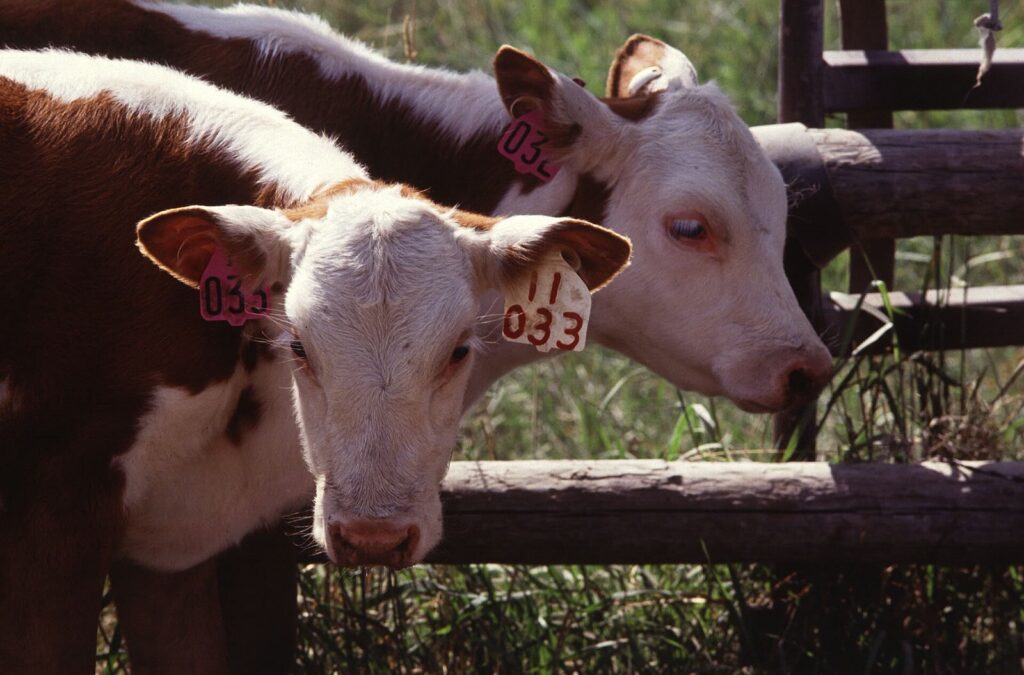
Beef cross calves are rarely sold as just “crosses” for long; the first thing a rearer asks is which bull was used. Charolais, Limousin, Angus and Hereford sires each leave a different calf behind them, and the farm buying the lot plans housing, feeding and finishing weight around that difference. This piece puts the four common sire breeds side by side from a seller’s point of view: what the calf looks like, what kind of buyer it suits, and what to write in the offer so nobody has to guess at the ramp.
Why beef-sired calves sell differently from pure dairy bulls is covered in our piece on beef-sired calves out of the milking herd. Here the focus is the comparison.
Beef cross calves by sire: a side-by-side view
The table is a practical summary, not breed-society data. Herds vary, and so does the dam: a Charolais calf out of a Montbéliarde cow is not the same animal as one out of a Holstein heifer.
| Sire breed | How the cross usually looks | Frame and finishing | Who tends to want it |
|---|---|---|---|
| Charolais | Cream, white or light grey | Large frame, strong growth, finished later and heavier | Bull fatteners with time and feed to take calves to a big carcass |
| Limousin | Wheat to red, light muzzle; colour varies more on dairy dams | Muscular with a usable finishing frame | Fatteners who want muscle without the extreme type |
| Aberdeen Angus | Mostly black, often polled | Medium frame, early maturing, finishes on forage-based rations | Rearers who finish lighter and value easy handling |
| Hereford | White face on a red or black body | Hardy, docile, steady growth on grass | Extensive or semi-intensive systems with a grazing phase |
Two things follow from that table. The continental crosses, Charolais and Limousin, go mostly to farms that fatten bulls intensively and want weight. The British crosses, Angus and Hereford, go to farms that care more about calving ease on their own cows later, quiet temperament and an earlier finish. Neither group is better; a lot sells fastest when it lands with the farm that does that job.
Colour is a clue, not a description
Sellers lean on coat colour because it is quick. On a group from one sire that works. On a mixed shed it causes trouble.
Black calves out of Holsteins can be Angus crosses, but they can also be by other black sires, or simply dark dairy calves. A red calf can be Limousin, Hereford without much white, or a red Holstein. Charolais crosses on darker dams sometimes come out grey or dun, not white. A buyer who finds three sire types in a pen sold as one will not trust the next offer.
So state the sire breed in writing for each group. If you know the bull, say so. If calves came from several herds and the sire is only known for some, count those separately. Our page on beef-dairy crossbreeds spells out what we need: sire breed, dam breed, sex, age, weight and whether the calves were fed and housed together. A lot labelled only “mixed beef cross” is one we cannot place.
Horns, sex and dam breed
Angus crosses are often polled. Hereford lines exist both horned and polled, and continental crosses vary. Say whether calves are disbudded or polled if it differs within the group, split bulls and heifers in the count, and name the dam breed. The dam changes frame and growth almost as much as the sire.
Which cross for which buyer and weight class
Most beef crosses from dairy farms are sold young, as milk-fed calves in the first weeks. Others are reared on to starter weight, and some beef-bred groups are weaned and sold as stores. The weight bands we work with are indicative: dairy calves 52–90 kg, starter calves 110–150 kg, and weaned or stocker calves 220–350 kg, the last for beef breeds only. The exact spec is agreed per lot, and the details are on how we buy calves.
In practice the young Charolais and Limousin crosses suit rearing farms with milk-feeding setups that grow bulls on for fattening. Angus and Hereford crosses suit the same farms where the plan is a lighter, earlier finish or a grazing phase. A weaned offer should also say whether the calves are suckler-bred or dairy-bred crosses.
A good offer usually reads like this, one line per group:
- 18 Charolais × Holstein bulls, 3–5 weeks, weighed on farm, ear tags listed
- 12 Angus × Holstein, 7 bulls and 5 heifers, polled, same age range
- Housed and fed together since collection, passports ready
Mixing sire breeds on one truck
A load does not have to be one breed, and in many dairy regions a mixed truck is normal. What matters is that each group is counted and described, and that calves of very different size or age are not loaded as one group.
Lot size works on the same rules as any other calf. For journeys up to about eight hours’ drive we take a minimum of 28 head; for long-distance collection with a trailer the minimum is 150 head. Collection is EXW at your farm or collection point, with our own trucks, so you do not arrange transport. Every animal needs ear tags and a passport, and the EU INTRA health certificate is issued in TRACES NT by the official vet before loading. Payment is in EUR, and the price per head is agreed per lot.
Where the crosses come from matters for distance planning. Angus- and Hereford-sired calves are widespread in Irish dairy herds, while Charolais and Limousin crosses are common in the French and German trade, and the Netherlands supplies a mix. Our supplier countries page lists the eleven countries we buy in, with a page for each.
Selling a cross lot to a Polish rearer
Polish rearing and finishing farms buy beef crosses steadily, and the sellers who place them easily are the ones whose offers look the same every time: same sire breeds, similar ages, numbers that do not swing from load to load.
If you have a regular supply of beef-sired calves, the shortest route is the supplier offer form, where you can pick the breed, sex, monthly numbers and weight. For how a longer cooperation works, including the trial lot, see supplying calves as a partner, and common practical questions are answered in the calf supplier FAQ. You can also call or WhatsApp +48 691 900 728, or write to biuro@eurocieleta.pl with the sire breeds and numbers you expect over the next few months.